 Trusted Service
 30 Day Return Policy
 2 Year Warranty
 Worldwide Delivery
Pine martens are among Britain's rarest and shyest mammals, most active at dawn, dusk and through the night, deep in woodland. So when Dan Harris set out to film one in Scotland, he knew it wouldn't be quick. It took 20 days, a failed first attempt, a 20-foot abseil and a night bivvied on the edge of a waterfall, but he finally filmed an adult pine marten emerging from its den, followed by a mother and her kit.
This is what those 20 days show about how pine martens actually behave.
Day 1: reading the signs in the forest
The search began in a conifer forest on the west coast of Scotland. Pine martens are almost impossible to find by sight alone, so Dan looked for the clues they leave behind: tracks and scratch marks on the moss, well-used paths, and above all scat.
Pine marten scat is distinctive. It's long, thin and often twisted, because martens wriggle their hips as they go, and is usually 4 to 12cm long and full of fur, bone, feathers and plant matter. It's often left in prominent places such as logs, boulders and the middle of tracks, as martens are real exhibitionists about their scat.
Early on, Dan found some old scat on a track, a sign that martens were using the path to travel back and forth. The further into the forest he went, the more fresh scat he found.
The first trail camera
With a clear track and fresh scat, Dan set up a trail camera overlooking the path and waited. After five days, he walked back through the soggy forest to check it, and found what he was hoping for: a pine marten walking along the trail, then a second, and what looked like a kit.
The footage showed the martens scent marking directly in front of the camera, which fits what's known about them. Pine martens are solitary and territorial, and mark their range with scent. They also seemed to appear every morning and evening, which suits an animal that's mainly active around dawn and dusk and after dark.

A wet night and a failed search
That evening, Dan returned to the forest in pouring rain with a thermal camera. Warm-blooded animals show up clearly on thermal, even in wet woodland, and the first heat signature wasn't a marten but a hedgehog. Later, branches snapped somewhere ahead in the dark, and the thermal camera revealed a pair of red deer.
There was no sign of a pine marten before midnight, and Dan left feeling he'd failed. Three days later, the trail camera showed no martens at all. His conclusion was that the trail was a route they used to travel through the forest, not somewhere close to a den, which left him back at square one.
Deeper into the forest, and over a cliff
For the second attempt, Dan reasoned that pine martens would den as far from disturbance as they could, so he'd have to go much deeper into the forest. That's broadly true, though martens also use buildings and old nests, so dens aren't always remote. Dens are most often in trees, then in rocks, and in Britain most are elevated.
Getting there meant a 20 foot abseil down a cliff, which is a job for someone with training and the right equipment. At the bottom, a ledge line gave a sheltered route along the base of the rock, and below it was a river flanked by rock walls with a waterfall at one end. Rock crevices are a common den site, and the whole area was sheltered enough for all kinds of animals.

Scat that smells of almonds?
Down by the river, Dan found more scat, on one of the trails and full of small bones, the remains of small rodents. That fits what pine martens eat: in Britain, small mammals make up at least 40% of their diet.
Dan sniffed it, and said it smelled of almonds. Other people describe a fresh marten scat as sweet and musky, and have compared it to Parma violets, damp hay or Lapsang Souchong tea. All agree that it isn't unpleasant, and that it differs from the foul smell of most other mustelid scats. Dan puts the almond smell down to poisonous cyanogenic berries in their diet. We couldn't find that explanation in the research, but diet does affect both the colour and the smell of marten scat, particularly berries in late summer and autumn.
Day 20: the waterfall camp
Dan left a trail camera out for a week, and hit what he calls the jackpot: pine martens, and otters too, using the same path to climb the waterfall.
That evening, he set up camp on the edge of the waterfall in a bivvy bag. Pine martens are mainly active around dawn and dusk, so the plan was to watch at last light, sleep, then watch again at first light. The setup was deliberate. The wind was blowing down the valley, carrying his scent away from the martens, and the noise of the waterfall covered any sound he made. It wasn't a comfortable night, though. He was soon covered in ticks.
As the light faded, things began moving in the shadows below the cliff, and the thermal camera picked up a heat signature. Dan switched to infrared to zoom in, and an adult pine marten emerged from its den right in front of the camera.
This one had found an egg. Dan explains that pine martens are tree specialists, so bird's eggs are an important source of food, and they pick them up gently and cache them to eat later. Researchers have recorded martens caching food around their dens, mostly birds, small mammals and amphibians. After it left, a mother and her kit appeared, and the first marten returned home at midnight.
Pine marten behaviour at a glance
What the footage shows fits the wider picture of how pine martens live:
- Activity: mainly at night, around dawn and dusk, though they can be seen in daylight outside the breeding season
- Territory and scent: solitary and territorial, marking their range with scent and leaving scat in prominent places like logs and boulders
- Diet: omnivorous, with voles and mice, birds, eggs, insects, frogs and berries all on the menu, and food cached near the den
- Dens: tree cavities, rock crevices, buildings and old nests, with most in trees and most elevated
- Family life: slow breeders, with kits born in March or April after a delayed implantation of around 230 days. Kits start exploring outside the den at about seven weeks old, and the mother raises them alone
Watching pine martens without disturbing them

Pine martens have been fully protected under Schedule 5 of the Wildlife and Countryside Act 1981 since 1988. In Scotland, it's an offence to intentionally or recklessly disturb one
in its den, or to damage, destroy or obstruct access to a den. Blocking access to a den during the breeding season could separate young from their parent, which NatureScot says would be a wildlife crime.
Camera traps close to a potential breeding den can cause disturbance, and NatureScot says they need a survey licence. Basic pine marten surveys don't need one, provided you take care to avoid disturbing animals in their dens. The simplest rule is to keep well away from dens, stay downwind and stay quiet.
Ticks are common in Scottish woodland, as Dan found out, and some carry the bacteria that cause Lyme disease. To stay safe, keep skin covered, use insect repellent containing DEET, check yourself carefully afterwards, particularly behind the knees and along the hairline, and remove any tick promptly with a tick removal tool or fine-tipped tweezers, without squeezing it. If you develop a round or bullseye-shaped rash, or flu-like symptoms, speak to your GP.
The kit behind the footage
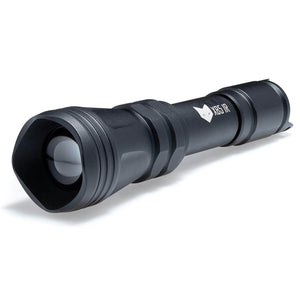
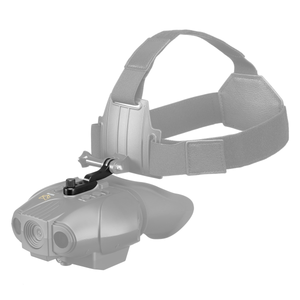
The footage was filmed using the Nightfox DV2 thermal camera and the Nova infrared night vision aid, with trail cameras covering the paths and den. The thermal camera picks up the heat signature, and infrared then lets you zoom in for a closer look. If you want the species detail, including diet, breeding and legal protection, our key facts about pine martens piece covers the rest. The same series has taken Dan to an otter family on Mull, a starling roost and a badger sett, and each has its own behind-the-footage write-up.
Next in the series: the final episode in Scotland, where Dan sets out to film what he describes as the UK's only venomous mammal.
FAQs
How do you find pine martens in the wild? Mostly by their signs: scat on logs, boulders and tracks, along with tracks and scratch marks on moss. Trail cameras can confirm they're there, but check the licensing advice near dens.
What does pine marten scat look like and smell like? It's long, thin and often twisted, usually 4 to 12cm, and full of fur, bone, feathers and plant matter. Fresh scat has a sweet, musky smell that isn't unpleasant, and it varies with diet.
When are pine martens most active? Mainly at night, and around dawn and dusk. They can be active in daylight outside the breeding season.
Do pine martens store food? Yes. Researchers have recorded them caching food around dens, mostly birds, small mammals and amphibians, and Dan filmed one carrying away an egg.
Can you see pine martens with a thermal camera? Yes. They're warm-blooded, so they show up clearly in the dark, though thermal also picks up other animals. Dan's thermal found a hedgehog and red deer before it found a marten, and he switched to infrared to identify the marten.
Is it legal to film pine martens? Yes, from a distance. Pine martens are fully protected, and in Scotland it's an offence to disturb one in its den or damage its den. Camera traps close to a potential breeding den need a survey licence from NatureScot.