 Trusted Service
 30 Day Return Policy
 2 Year Warranty
 Worldwide Delivery
 Bat survey season in the UK runs from May to September, with peak activity falling between May and August. This is the only window when dusk emergence and dawn re-entry surveys produce valid, licensable results, because it's when bats are active and using roosts consistently enough to observe.
If you're planning survey work for a site with potential bat roosts, that narrow window shapes everything: how many visits you need, how they're spaced, and how much runway you've got before your client's planning deadline.

Bat surveys don't usually start in isolation. Most projects begin with a Preliminary Ecological Appraisal (PEA), a broader scoping exercise that flags whether bats or other protected species need further attention at all. If it does, that leads into the bat-specific Preliminary Roost Assessment (PRA): an inspection for potential roost features (PRFs) and signs of activity such as droppings or staining, the gaps, crevices, and access points that suggest a building or tree could support roosting bats. Trees are assessed slightly differently, usually through a Ground Level Tree Assessment (GLTA) and, where access allows, an aerial inspection of the crown itself.
When exactly is bat survey season?
- Peak activity surveys (emergence/re-entry): early May to end of August, when bats are most active and results are most reliable
- Extended survey window: through to the end of September in most guidance, though later surveys carry more risk of inconclusive results as activity drops
- Autumn swarming surveys: mid-August to October, used specifically to assess hibernation sites
- Preliminary Roost Assessments (PRAs): can be done year-round, since they're a structural inspection rather than an activity survey
Timing isn't just best practice, it's often a licensing requirement. Surveys carried out outside the active season, or surveys that have gone stale relative to a planning application, are a common reason for delay: a report over 18 months old typically needs a fresh site check before it can be relied on, and individual licensing bodies (Natural England, NRW, NatureScot) each have their own specific rules on how current the data needs to be.
All UK bat species are legally protected, which is part of why the season and survey spacing matter so much: results have to hold up as evidence, and that means following recognised timing and methodology rather than fitting surveys around a project schedule. If you want the fuller detail on the legal protections themselves, see our piece on why bats are protected in the UK.
How many surveys do you actually need?
The number of visits depends on what a preliminary roost assessment (PRA) finds when it inspects a structure or tree for potential roost features (PRFs):
- Low suitability (little to no evidence, few features): typically one survey visit
- Moderate suitability (some features, no confirmed evidence): typically two survey visits
- High suitability (bat evidence found, or multiple suitable features): typically three survey visits
Each visit needs to be spaced at least three weeks apart, since bat use of a roost changes across the season, so a single early-season visit won't necessarily reflect what's happening later on. This spacing is a large part of why a high-suitability building can easily need the entire May–August window just to complete its survey cycle.
What actually happens during a survey
Emergence surveys should have surveyors in place 15 minutes before sunset and finish 1.5 to 2 hours after sunset, with timing adjusted based on what previous dusk surveys at the same site have shown. Timing isn't uniform across species, though: bats that emerge soon after sunset in higher light, such as noctule (Nyctalus noctula) and common pipistrelle (Pipistrellus pipistrellus), are far easier to see with the naked eye than late emergers like Natterer's bat (Myotis nattereri) and brown long-eared bat (Plecotus auritus), which can appear over an hour after sunset, occasionally not at all during a given emergence survey, requiring a dawn re-entry survey instead to confirm the roost. A wide range of local factors can shift emergence earlier or later too, from how exposed the roost is to the setting sun, to nearby vegetation cover, to how overcast the evening is. Surveyors typically combine visual observation with bat detectors, which pick up echolocation calls inaudible to the human ear, and acoustic recordings are often later analysed to help confirm species.
Weather matters more than people expect, though its effect varies a lot by species: some bats are more sensitive to temperature, others to wind or rain, and a few barely change behaviour at all in poor conditions. In general, though, cold, wet, or unusually windy nights reduce activity and make results less reliable, so surveyors build weather checks into planning each visit. A run of poor weather during the season can push a survey programme right up against its deadline, which is another reason to start early rather than assume the four-month window is more forgiving than it is.
Roost types, and why they matter for timing
Not all roosts are used the same way across the year, which is part of why the season and survey type need to match what's actually being assessed:
- Day roosts: used by individual bats or small groups sheltering during daylight
- Maternity roosts: where females raise young over summer, the most sensitive roost type to disturb
- Satellite roosts: used by breeding females close to a main maternity colony
- Feeding and night roosts: used between or during feeding bouts
- Mating sites: active from late summer into autumn
- Swarming sites: where bats gather in large numbers from late summer to autumn, often near hibernation sites
- Hibernation roosts: used over winter, assessed separately from the main survey season
This is why a single "bat survey" isn't always one type of visit. A hibernation roost, for instance, is assessed on a different timeline entirely from a summer maternity roost.
Licensing: planning permission isn't the same as a bat licence
Getting planning permission granted doesn't automatically clear a project to proceed if bats are present. A separate European Protected Species (EPS) licence, issued by Natural England (in England), Natural Resources Wales, or NatureScot depending on location, is required before any work that could disturb a roost can go ahead. Planning permission and an EPS licence are assessed by different bodies against different criteria, and a project can be fully permitted and still not legally able to start on site.
Securing that licence usually means agreeing a bat mitigation plan first, setting out how the roost will be protected, replaced, or compensated for during and after the works. This is also increasingly tied into biodiversity net gain requirements, which in England now apply to most development and can shape how mitigation for bats and other protected species is designed into a project from the outset.
Book earlier than you think

Demand for licensed ecologists spikes hard during the May–August peak, since every site needing an emergence survey is competing for the same narrow window and the same pool of surveyors. If you're building your own survey calendar, or advising a client on when to get theirs booked, doing it well ahead of the season, not once it's already underway, is standard practice across the industry.
What this means for surveyors in the field
Survey season is short, and most of it happens after dark. That combination puts real pressure on scheduling: multiple site visits, each three or more weeks apart, all squeezed into a four-month window, often while juggling other projects running in parallel.
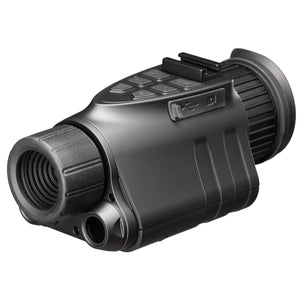
It also puts pressure on equipment. Surveys have to be non-intrusive: white light and unnecessary disturbance defeat the point of assessing natural bat behaviour, while still producing footage that holds up as evidence in a report. That's part of why night vision and thermal imaging have become standard tools for bat work: they let surveyors observe emergence and activity without introducing light the bats wouldn't otherwise experience, and using the right infrared wavelength matters for both survey quality and surveyor safety.
Getting equipped, whatever point in the season you're at
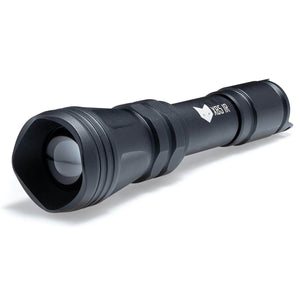
If your kit's been letting you down partway through this year's surveys, it's worth sorting before the season's final weeks rather than pushing it into next year's rush. And if you're reading this outside the active season, this is genuinely the best time to sort your equipment for the year ahead, before demand for professional surveys (and everyone's attention) spikes again in May. A digital night vision aid or thermal unit that you trust in low light, paired with a discreet IR source where you need it, takes one variable out of a job that already has enough of them: weather, access, bat behaviour. If you're weighing up which device suits your survey work, our Nova vs Whisker comparison is a good place to start, our helpful guide to the Thermal Master DV2 is worth a look if thermal detection suits your site better than night vision, and don't forget supplemental IR.
BCT published its first dedicated technical guide on using night vision aids for bat emergence surveys in 2026, endorsed by CIEEM, which speaks to how central this equipment has become to professional survey work. For a breakdown of what the guide covers and how Nightfox kit stacks up against it, see BCT Bat Survey Night Vision Guidelines 2026: What Ecologists Need to Know on the Nightfox blog.
FAQs
When is bat survey season in the UK? Bat survey season runs from May to September, with peak activity surveys typically carried out between May and August.
Can bat surveys be done outside of survey season? Preliminary Roost Assessments can be carried out year-round. Activity surveys such as dusk emergence or dawn re-entry surveys need to happen within the active season to produce valid results.
How old can a bat survey be before it needs redoing? Longer than you might expect, provided nothing on site has changed. Per CIEEM's guidance, a survey report under 12 months old is generally still valid; 12–18 months is usually fine with some exceptions; 18 months to 3 years typically needs a fresh site walkover and possibly repeat surveys depending on circumstances; beyond 3 years, most surveys are likely to need redoing. Individual licensing bodies vary too: Natural England asks for a walkover check within 3 months of application, NRW asks whether data is under two active seasons old, and NatureScot generally allows data to remain valid for two further survey periods.
How many bat survey visits do I need? It depends on roost suitability found during the preliminary assessment: typically one visit for low suitability, two for moderate, and three for high suitability, each spaced at least three weeks apart.
What's the difference between a preliminary roost assessment and an emergence survey? A preliminary roost assessment (PRA) is a structural inspection for potential roost features (PRFs) that can happen year-round. An emergence or re-entry survey is a dusk or dawn activity survey that can only take place within the active season, and is only needed if the PRA finds potential for bats.
Does a Preliminary Ecological Appraisal (PEA) include bat surveys? Not directly. A PEA is a broader scoping exercise that identifies whether bats or other protected species could be relevant to a site at all. If it flags potential for bats, that triggers a bat-specific PRA (or GLTA for trees) as the next step, rather than the PEA itself constituting a bat survey.
If I have planning permission, do I still need an EPS licence? Yes. Planning permission and a European Protected Species (EPS) licence are separate processes assessed by different bodies. Having planning permission doesn't remove the legal requirement for a licence if bats or a roost are present.
Can bad weather delay a bat survey? Yes, though the effect varies by species: some are more sensitive to cold, others to wind or rain. In general, cold, wet, or windy nights reduce bat activity and can make results less reliable, so a poor run of weather during the season can push a survey programme close to its deadline.